Just Call Him The King Of Giving
| Written by Arlene Edmonds |
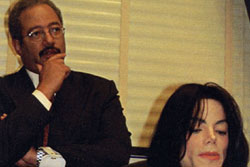
Michael Jackson leaves behind a philanthropic legacy of donating more than $500 million. Jackson has donated to groups like the United Negro College Fund (UNCF), the NAACP, the National Rainbow Coalition, and organizations addressing world problems including Transafrica, the Dakar Foundation, and the Minority AIDS Project. So, it’s not surprising that Jackson’s will leaves approximately a fifth of his estimated half billion dollar empire to the many charities that he was known to support. When Jackson gave, it was certainly more than “chump change.” In many cases it was more like endowments. For instance, he gave the UNCF $1.5 million in 1986, which led to the creation of the Michael Jackson Scholarship Fund. This has provided some 500 scholarships of up to $4,000 a year to HBCU undergraduate students majoring in communications, English or one of the performing arts. It is still an active scholarship, and 34 students will be recipients of this fund for the 2009-2010 academic year. UNCF vice president James Alston was in attendance at a 1988 fundraiser at Madison SquareGarden in New York City where Jackson was the headliner. The gala raised $600,000 for UNCF’s Northern Region, which includes Philadelphia. Jackson also received UNCF’s highest honor, the Frederick D. Patterson Award and an honorary degree from UNCF-member institution FiskUniversity at that event. On March 31, 2004, Jackson, who contributed to the Congressional Black Caucus, visited Capitol Hill to confer with federal lawmakers and their staff about what he could do to help the fight against AIDS in Africa. Among the offices he visited was that of Second District Congressman Chaka Fattah, D-Pa. “Michael Jackson was the major inspiration and motivator for my involvement in the issue of safe blood for Africa,” said Fattah. “I’m proud of the fact that since I began advocating for the safe blood initiative, we have gone from zero to 35 Safe Blood Centers across Africa, with American funding.” Yet Jackson’s philanthropic and humanitarian legacy doesn’t end there. After receiving the Pepsi endorsement of $1.5 million, it was donated to what is now known as the Michael Jackson Burn Center for Children at the Brotman Medical Center in Culver City, Calif. Jackson himself had been treated at the facility when he was burned while performing with his brothers during a Pepsi commercial production. There were also substantial six-figure lump sums like the $400,000 check he gave to Prince Charles and Princess Diana for the Prince’s Trust and a children’s hospital. He contributed the proceeds from his 1988 hit song, “Man in the Mirror” to Camp Ronald McDonald for Good Times, a facility for youngsters with cancer. The megastar outfitted the Mount Sinai New York Medical Center with a 19-bed unit for cancer research. Then there’s the Heal the World Foundation and the contributions from the “We Are the World” song he co-wrote with Lionel Richie that address social justice issues at home and abroad. “Michael Jackson really believed the words to songs like ‘Heal the World,’ ‘We Are the World,’ and ‘Black and White,’” said entertainment mogul Kenny Gamble, who produced the Jacksons more than 25 years ago. “From what I know of him personally, he was a quiet contributor committed to helping others. Many people don’t know that he supported Nelson Mandela when he was in prison in South Africa and helped him when he got out.” Gamble shared that in 2005, before his second child molestation case, Jackson asked to meet with him in New York. There, Jackson insisted on his innocence and affirmed his ardent commitment to giving to others. Jackson said he was aware that some of those who surrounded him did not have his best interest at heart, and that money was the driving force behind the false allegations. “He said that he wanted me to know that he would never hurt a child,” said Gamble. “I believe the truth about all those who were trying to destroy him will surface. Michael Jackson was a very humble, generous and spiritual person. Many people take kindness for weakness. Unfortunately, those who were (unscrupulous) found his weakness was prescription drugs. Yet one cannot deny his genius or that he really meant it when he talked about his vision for the world. He really didn’t care about money. That’s why he gave almost everything he had.” So, Jackson was clearly not just a dynamic performing artist but one of the world’s formidable philanthropists with a fundraising track record that is still exhaustive. He donated to the Cities and Schools Scholarship Fund and UNCF Ladders of Hope. His contributions also went to the American Cancer Society, the Sickle Cell Research Foundation, Volunteers of America, the Make-a-Wish Foundation, the Motown Museum, the BMI Foundation that supports music education for gifted children, Dreamstreet Kids, Children’s Institute International, Juvenile Diabetes Foundation, and many more. The list also includes smaller grassroots and local organizations like the 28th Street YMCA, Big Brothers of Greater Los Angeles, the Watts Summer Festival, and The Carter Center’s Atlanta Project. Nearly a decade ago, the Guinness Book of World Records even recognized the late entertainer as the “Most Charities Supported by a Pop Star.” This came just seven years after he discussed the plight of AIDS victims, including the late Ryan White, before performing “Gone Too Soon” at former President Bill Clinton’s inauguration in 1993. Consequently, endowing several charities from his estate means that Jackson will continue to be one of the foremost contributors of the 21st century. “Michael Jackson’s dedication to humanitarian issues, including helping raise untold millions of dollars to alleviate poverty and hunger, showed us that he understood how to use his fame to advocate for equality and freedom worldwide,” said NAACP president Todd Jealous. “Michael’s compassion and vision for a better world, which he so clearly expressed in his music, will be part of his ongoing legacy. The world lost a great artist, but his legacy of exuberant optimism and undeniable talent will live on.”
Philadelphia Tribune / Thanks Neyha! |